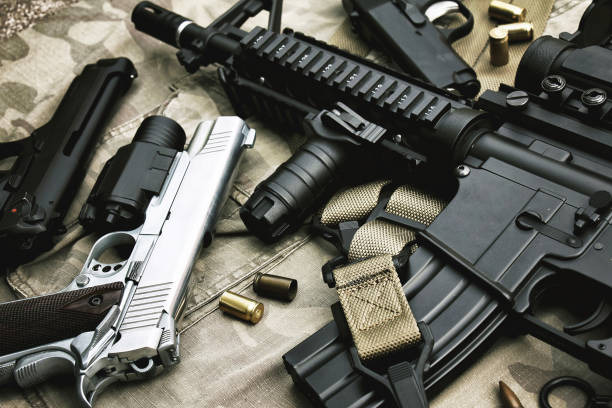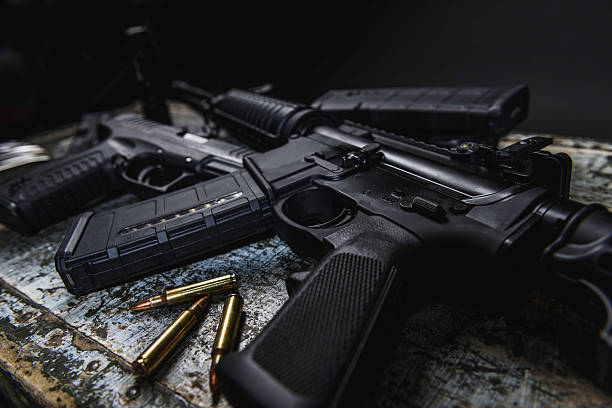
How to Buy Rifles Online and Choose the Best Semi-Auto for Field Performance

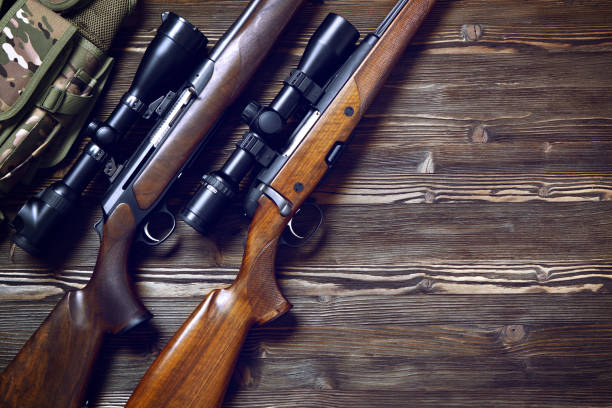
Hunting equipment on old wooden background. Hunting rifle and ammunition on a dark wooden background.Top view. rifle stock pictures, royalty-free photos & images

Ideal Uses for Each Type

Rifle Type Best Use Cases Notable Advantages Potential Drawbacks
Bolt Action Long-range hunting (e.g., deer) High accuracy; simple design Slower rate of fire; manual operation
Semi-Auto Short-to-medium range game (e.g., hogs) Faster follow-up shots; versatile calibers Heavier; slightly less pinpoint precision

Factors Hunters Should Consider

  • Hunting Environment:Open terrains favor long-range precision where bolt actions excel, while forested or brushy areas might require the faster response time provided by semi-autos.
  • Personal Preference:Some hunters prefer the rugged simplicity of a bolt action rifle, while others appreciate the technological advancements found in modern semi-automatics.

By understanding these differences and weighing your priorities as a hunter, selecting between a bolt action or semi-auto rifle becomes less about technical preference and more about finding the tool best suited to your specific needs in the field.

Exploring the Mechanics of Bolt Action Rifles for Sale and Their Applications

Their design is simple yet effective, providing consistent performance for tasks that demand precision.

How Bolt Action Rifles Work

A bolt action rifle operates via a manually operated mechanism that involves opening and closing the rifle’s breech using a bolt handle. This design offers several advantages in terms of control, reliability, and ease of maintenance.

  • Bolt:The primary mechanism responsible for loading and ejecting cartridges as well as cocking the firing pin.
  • Receiver:Houses the bolt and provides structural support for the barrel.
  • Barrel:The metal tube through which the bullet travels after being fired.
  • Magazine (optional):Stores additional cartridges that can be chambered manually.

Steps to operate a bolt action rifle: 1. Lift the bolt handle to unlock the breech. 2. Pull back on the bolt to eject a spent cartridge (if applicable) and prepare for reloading. 3. Push forward on the bolt to chamber a new cartridge from either the magazine or manually load one into the chamber. 4. Lock the breech by lowering the bolt handle into position.

This manual operation contributes to their mechanical simplicity, reducing potential points of failure compared to more complex firearm mechanisms.

Advantages of Bolt Action Rifles

  • Precision:The rigid structure of a locked breech enhances accuracy by minimizing movement during firing.
  • Reliability:Fewer moving parts mean less likelihood of malfunctions, especially in challenging conditions such as rain or snow.
  • Ease of Maintenance:Simple construction makes cleaning and repairs straightforward even in field settings.
  • Caliber Options:Available in an extensive range of calibers suitable for various applications, from small game hunting to large dangerous game.

Common Applications

Application Description
Hunting Ideal for medium-to-large game due to precision over long distances.
Target Shooting Popular among competitive shooters thanks to high accuracy potential.
Military Use (Historically) Widely used before semi-auto rifles became standard; still employed by snipers today.
Survival Situations Reliable tool for self-reliance in wilderness or survivalist contexts.

Why Hunters Choose Bolt Action Rifles

For hunters specifically, reliability under varying environmental conditions is crucial. Unlike semi-auto designs that may be more prone to jamming when exposed to dirt or moisture, a bolt action rifle is well-suited for rugged outdoor use. Additionally, its ability to accommodate powerful calibers gives hunters confidence when targeting large game animals such as elk or moose.

Finally, many hunters value tradition—bolt actions have been trusted companions for generations. This sense of heritage combined with modern engineering ensures their continued popularity among seasoned sportsmen.

By understanding both how these rifles function mechanically and where they perform best, you can determine whether this type aligns with your specific needs in hunting or other shooting activities.

Key Features of a Semi-Auto Rifle

  • Ease of Use: The self-loading mechanism reduces the effort needed for operation, making them user-friendly even for less experienced shooters.

Performance in Hunting Scenarios

Semi-automatic rifles excel in specific hunting situations where speed and adaptability are crucial.

Dense or Brushy Terrain

In areas with significant vegetation where visibility may be limited, speed matters. A semi-auto rifle provides hunters with quicker firing capabilities should they encounter game unexpectedly at close range.

Long-Distance Shooting

Although traditionally associated with bolt-action rifles, some modern semi-autos are designed for accuracy over extended ranges when paired with high-quality barrels and optics. However, due to increased moving parts in their mechanism compared to bolt actions, achieving extreme precision can be slightly more challenging.

Advantages and Potential Drawbacks

Advantages Potential Drawbacks
Rapid follow-up shots Can be heavier than bolt-action models
High magazine capacity More complex maintenance requirements
Easily customizable Slightly reduced accuracy at longer ranges
Effective for moving targets Higher price point in some cases

Choosing a Semi-Auto Rifle for Your Needs

When selecting a semi-auto rifle for hunting purposes or any other use case, consider factors like caliber compatibility (to match your intended game), ergonomics (for comfortable handling), as well as magazine capacity (important when planning extended outings).

  • Research models from reputable manufacturers known for reliability.
  • Test different configurations at shooting ranges before making your purchase.

By understanding these aspects of semi-auto rifle performance and their specific advantages within various contexts, you can make an informed decision tailored to your needs.

Accuracy and precision are two critical factors hunters consider when selecting a rifle. Below is a detailed comparison of these two rifle types concerning their performance in accuracy and precision.

Bolt Action Rifles: The Pinnacle of Accuracy

They are often the preferred choice for hunters who prioritize precise, long-distance shots.

  • Simpler Mechanism:The manual operation of a bolt action rifle reduces the number of moving parts during firing, minimizing vibration and mechanical interference.
Scenario Why Bolt Action Excels
Open fields or plains Precision shooting at 300+ yards
Big game hunting (e.g., elk) Delivers consistent performance per shot

Semi-Auto Rifles: Balancing Speed with Accuracy

While they may not match the raw precision of bolt actions over long distances, modern advancements in manufacturing have significantly improved their accuracy.

  • Reduced Recoil Between Shots:Gas-operated systems help mitigate recoil, allowing hunters to stay more stable during rapid fire.
  • Shorter Reset Time:Faster cycling between shots enables quicker target reacquisition.
  • Versatility in Terrain:Semi-autos perform well in dense brush or scenarios where multiple shots may be required quickly.
Scenario Why Semi-Auto Excels
Dense woodlands Quick reaction time on fast-moving game
Predator control High capacity magazines for multiple targets

Comparing Accuracy Metrics

While bolt actions typically offer superior precision due to their mechanical simplicity and rigidity, this does not imply that semi-autos are inherently inaccurate.

  1. Rifle model quality
  2. Caliber selection
  3. Ammunition type
  4. Shooter skill level
Rifle Type Effective Range Group Size at 100 Yards (MOA)
Bolt Action Up to 1000 yards 0.5 – 1 MOA
Semi-Auto Up to 600 yards 1 – 2 MOA

Final Considerations

  • Opt for a bolt action if you require pinpoint accuracy over long distances.

Balancing these considerations alongside personal preferences will lead you toward the most effective choice tailored to your hunting objectives.

Finding Reliability: Tips for Choosing the Best Rifles Online Store

When selecting a rifle for hunting or other outdoor activities, reliability is one of the most critical factors to consider. A reliable rifle can make the difference between a successful hunt and a frustrating day in the field. Understanding what contributes to reliability and how it impacts performance can help you make an informed choice.

What Defines Rifle Reliability?

Reliability in a rifle refers to its consistent ability to perform as expected under various conditions.

  • Consistent Functionality: The rifle should fire successfully every time the trigger is pulled.
  • Durability: The firearm must withstand harsh environmental conditions, including rain, dirt, and extreme temperatures.
  • Minimal Malfunctions: Jamming, misfires, or feeding issues should be infrequent or nonexistent.
  • Ease of Maintenance: A reliable weapon should be easy to clean and maintain without requiring excessive tools or expertise.

Factors That Impact Rifle Reliability

  1. Their manual operation reduces the chances of mechanical failure.
  2. Semi-automatic rifles are more complex and may be prone to jamming if not properly maintained or if low-quality ammunition is used.
  3. Rifles constructed with high-quality materials like stainless steel or aircraft-grade aluminum tend to offer better durability and performance over time.
  4. Precision machining and attention to detail during manufacturing also play an essential role.
  5. Rifles designed with weatherproof coatings or synthetic stocks tend to perform better in harsh environments compared to those with untreated components.
  6. Using the correct caliber and high-quality ammunition reduces misfeeds and improves overall reliability.
  7. A properly maintained firearm is inherently more reliable than one that is neglected. Some rifles require less frequent cleaning than others due to their design.

Comparing Bolt Action vs Semi-Auto Rifles for Reliability

Feature Bolt Action Rifles Semi-Auto Rifles
Moving Parts Few moving parts; simple mechanism Many moving parts; more complex
Susceptibility to Jamming Rarely jams May jam if dirty or if poor ammo is used
Maintenance Needs Minimal; easier to clean Requires regular cleaning for peak performance
Environmental Durability Performs well under rugged conditions Can struggle in extreme dirt or moisture

Why Reliability Matters

  • Confidence during critical moments when accuracy counts.
  • Reduced likelihood of equipment failure when you’re far from backup resources.
  • Enhanced safety by minimizing risks associated with malfunctions like accidental discharges or misfires.

Whether you’re stalking big game in challenging terrains or spending hours waiting for prey, peace of mind comes from knowing your rifle will function without fail at the moment you need it most. As you evaluate options, prioritize reliability along with factors like caliber choices, weight, and accuracy for a comprehensive decision-making process.
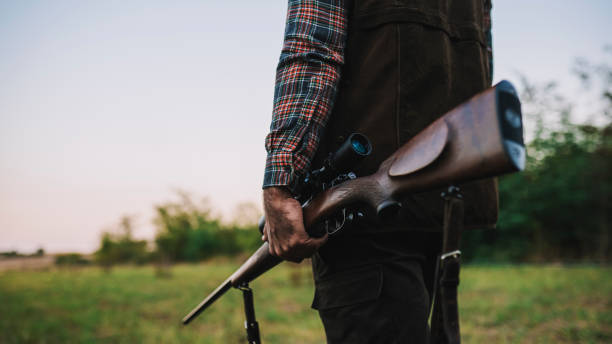
Hunters Day stock photo Real hunter in the field holding rifle and binoculars rifle stock pictures, royalty-free photos & images

Power and Caliber Options: Selecting the Right Rifle for Your Needs

When selecting a rifle, one of the most critical decisions revolves around power and caliber. The choice of caliber directly affects a rifle’s performance, accuracy, and usability in specific situations. Whether you’re hunting big game or shooting at long range, understanding your options is key to making an informed decision.

Factors to Consider When Choosing Caliber

Selecting the right caliber involves evaluating several factors that align with your intended use.

  • Game Type: The size of the animal you’re hunting plays a vital role in determining the appropriate caliber.
  • Small game (e. g. , rabbits, squirrels): . 22 LR, .
  • Medium game (e. g. , deer): . 243 Winchester, .
  • Large game (e. g. , elk, moose): .
  • Short-range shooting (<200 yards): Lower velocity calibers like . 30-30 Winchester.
  • Long-range shooting (>400 yards): High-velocity calibers such as 6. 5 Creedmoor or . 308 Winchester.
  • Recoil Tolerance: Larger calibers often produce more recoil.

Popular Rifle Calibers and Their Applications

Caliber Typical Use Advantages Disadvantages
.22 LR Small game hunting & target practice Low cost; minimal recoil Limited range; not suitable for larger game
.243 Winchester Medium-sized game (deer) Accurate; moderate recoil Limited stopping power for large animals
.308 Winchester Medium to large game Versatile; commonly available Heavier recoil for some shooters
6.5 Creedmoor Long-range precision & medium game High accuracy at long ranges May be overkill for short distances
.300 Win Mag Large game & long-range hunting Exceptional power & distance Significant recoil; higher ammunition cost

Power vs.

While powerful calibers like the . 300 Win Mag offer undeniable stopping power, they may not always be practical depending on your needs: – For beginners or those who prioritize comfort over brute force, lighter calibers such as the . 243 Winchester may offer better usability. – On the other hand, hunters targeting dangerous or large animals must ensure their chosen cartridge delivers sufficient energy to ensure a humane kill.

Matching Rifle Type with Caliber

The type of rifle can also influence how specific calibers perform: 1.Bolt Action Rifles: Often paired with larger-caliber rounds due to their ability to handle high-pressure cartridges efficiently. 2.Semi-Auto Rifles

Balancing power and practicality ensures that you choose a rifle that suits both your technical needs and personal preferences while delivering optimal performance in the field.

Weight, Handling, and Practicality: Factors to Consider When Choosing a Rifle

When selecting a rifle, weight, handling, and practicality are key factors that can significantly affect your overall shooting experience. A rifle must not only fit the intended purpose but also be comfortable and manageable in various field conditions. Here’s an in-depth look at these considerations.

Weight

The weight of a rifle plays a crucial role in its usability. A lighter rifle is easier to carry for extended periods, especially during long hunting expeditions or rugged terrain hikes. However, lighter rifles often come with challenges such as increased recoil and reduced steadiness when aiming.

Pros of Lightweight Rifles:– Easier to carry over long distances. – Ideal for fast-paced hunting scenarios (e. g. , upland game hunting). – Quicker target acquisition due to improved maneuverability.

Cons of Lightweight Rifles:– Increased recoil may affect comfort and accuracy. – Less stable when shooting from unsupported positions.

On the other hand, heavier rifles offer stability and reduced felt recoil but can be cumbersome to transport. They are better suited for stationary or stand-based hunting situations where mobility is less of a concern.

Pros of Heavier Rifles:– Improved stability when aiming. – Often preferred for precision shooting or long-range applications.

Cons of Heavier Rifles:– Fatigue from carrying for extended periods. – Limited practicality in mobile hunting scenarios.

Handling

Rifle handling refers to how comfortably you can manipulate the firearm during use. Factors such as stock design, balance, grip texture, and length of pull all contribute to handling effectiveness. A well-balanced rifle with an ergonomic stock allows shooters to aim quickly and fire accurately under varying conditions.

Key factors influencing handling: 1.Length:Shorter rifles or carbines are easier to maneuver through dense brush or confined spaces but may sacrifice barrel length (and thus velocity).
2.Balance:Proper weight distribution ensures that the rifle feels natural when shouldered.
3.Ergonomics:Comfortable grips and adjustable features (e. g. , cheek rest or buttstock) enhance overall shooting experience.

Practicality

Practicality involves assessing whether the rifle aligns with your specific needs in terms of portability, maintenance requirements, accessories compatibility, and intended purpose.

  1. Portability:If you often hunt on foot across diverse terrains, opt for a lightweight setup with a durable sling attachment system.
  2. Durability:Look for weather-resistant finishes like synthetic stocks or corrosion-resistant coatings if you’ll encounter harsh environments.
  3. Scoped vs Iron Sights:Depending on your target range, practicality might mean selecting a model designed for easy scope mounting or one optimized for quick iron sight usage.
  4. Accessory Compatibility:Ensure availability of aftermarket components such as bipods, slings, or optics mounts tailored to your needs.
Rifle Feature Best Use Case Additional Notes
Lightweight Rifle Long treks through rugged terrain Focuses on ease of carrying
Heavyweight Rifle Precision-focused stand hunting Prioritizes accuracy over portability
Adjustable Stock Multi-user adaptability Ideal if multiple shooters will use it
Corrosion-resistant finish Wet/humid environments Protects against rust over prolonged usage

By carefully evaluating weight considerations alongside handling characteristics and practical features suited to your specific requirements, you can select a rifle that enhances both performance and comfort in real-world conditions while ensuring reliability throughout its lifetime usage span.


Where to Buy Rifles Online: The Best Picks for 2025

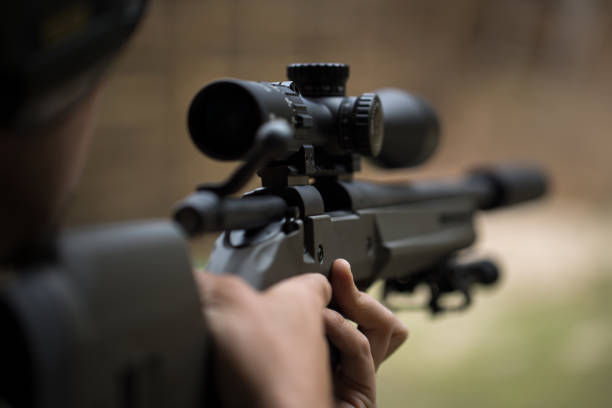
Sniper shooting rifle by looking through a scope. Sniper shooting rifle by looking through a scope. rifle stock pictures, royalty-free photos & images

When it comes to selecting the best rifles for 2025, technological advancements and practical field testing have produced some outstanding firearm innovations. Whether you’re a seasoned hunter, a competitive shooter, or simply an enthusiast, this guide captures the top rifles that stood out in terms of performance, reliability, and value. Below is an in-depth review of the standout models that underwent rigorous testing.

Key Criteria for Testing

  • Accuracy: Measured using consistent groupings at varying distances (100 yards to 1,000 yards). Precision was key here.
  • Reliability: Tested in adverse environmental conditions such as mud, rain, and extreme heat or cold.
  • Ergonomics: Assessed based on balance and ease of handling.
  • Build Quality: Materials used for construction were examined for durability and weight considerations.
  • Value: Performance relative to price.

Top Picks for 2025

  1. Key Features: The Bergara B-14 HMR continues to impress in 2025 with its exceptional accuracy out of the box. Featuring an adjustable comb cheekpiece and a free-floating barrel system, this rifle shines in both competition shooting and hunting scenarios.
  2. Calibers Available: .308 Win., 6.5 Creedmoor
  3. Price Range: $1,000–$1,200
  4. Why It’s Recommended: This rifle offers a balance between customizability and affordability without compromising precision.
  5. Key Features: Renowned for its lightweight design (approximately 6 pounds) and smooth bolt-action mechanics. Ideal for hunters needing a reliable rifle during long treks.
  6. Calibers Available: Wide range from .223 Remington to .300 Winchester Magnum
  7. Price Range: $800–$950
  8. Why It’s Recommended: The T3x Lite combines Scandinavian craftsmanship with versatility.
  9. Key Features: An innovative straight-pull bolt-action design allows faster follow-up shots compared to traditional systems.
  10. Calibers Available: .243 Win., .30-06 Springfield, .300 WSM
  11. Price Range: $1,300–$1,500
  12. Why It’s Recommended: A solid choice for hunters pursuing larger game due to its power and speed.
  13. Key Features: Built with aerospace-grade materials like carbon fiber barrels and chassis systems for reduced weight without sacrificing durability.
  14. Calibers Available: Includes long-range favorites like 6mm Creedmoor or .338 Lapua Magnum.
  15. Price Range: $2,500–$3,500
  16. Why It’s Recommended: Ideal for shooters focused on extreme precision at extended ranges.

Quick Comparison Table

Rifle Model Weight Action Type Primary Use Approximate Price
Bergara B-14 HMR ~9 lbs Bolt Hunting/Target Shooting $1,000–$1,200
Tikka T3x Lite ~6 lbs Bolt Lightweight Hunting $800–$950
Savage Impulse Big Game ~8 lbs Straight-Pull Large Game Hunting $1,300–$1,500
Christensen Arms MPR ~7 lbs Bolt Long-Range Shooting/Hunting $2,500–$3,500

Emerging Trends in Rifle Technology (2025)

  • Carbon-fiber materials are becoming more prevalent across mid-to-high-end models due to their reduced weight without compromising strength.
  • Modular designs allow users to customize stocks or barrels easily based on personal preferences or mission-specific requirements.
  • Suppressor-ready muzzle threads are now standard on most new releases as noise reduction becomes increasingly important in hunting applications.

In summary, the rifles listed above represent the pinnacle of modern engineering tailored to meet diverse shooting needs. Ensuring you select a rifle tailored not only to your budget but also your intended use case will deliver optimal performance from day one.

Shop Lever Action Rifles at the Best Rifles Online Store

Lever action rifles hold a special place in firearms history, offering a balance of practicality, reliability, and historical significance. Known for their unique operating mechanism, these rifles have been a staple for hunters, sport shooters, and firearm enthusiasts for over a century. Below, we explore the key characteristics of lever action rifles, their applications in hunting and shooting sports, and some notable models that continue to stand out.

Key Features of Lever Action Rifles

  1. Operating Mechanism
    Lever action rifles are defined by their lever mechanism located beneath the receiver. This design allows for smooth cycling between shots, with one fluid motion ejecting the spent cartridge and chambering a new one.
  2. Compact Design
    Lever actions are often more compact than bolt-action or semi-automatic rifles of similar calibers. Their shorter overall length makes them easy to handle in dense forests or while on horseback.
  3. Rapid Follow-up Shots
    One of the most notable advantages is the quick follow-up shot capability due to the rapid cycling process. This makes them ideal for scenarios where multiple targets or fast-moving game are encountered.
  4. Historical Appeal
    With roots tracing back to the mid-19th century, these firearms evoke nostalgia as symbols of American ingenuity during the Old West era.

Applications in Hunting and Shooting Sports

  • Big Game Hunting: Many lever actions chamber powerful rounds like .30-30 Winchester or .45-70 Government—excellent choices for medium-to-large game such as deer or elk.
  • Brush Guns: Their compact size makes them ideal for dense brush hunting environments where mobility is key.
  • Recreational Shooting: The lightweight design and manageable recoil make them accessible to beginners and great for target practice.
  • Cowboy Action Shooting Competitions: These firearms are frequently used in cowboy action shooting events due to their authentic historical connection.

Notable Lever Action Rifle Models

Model Manufacturer Caliber Options Special Features
Winchester Model 1873 Winchester Repeating Arms .44-40 Winchester, .38 Special Known as “The Gun That Won The West”
Marlin 336 Marlin Firearms .30-30 Winchester Durable design with side ejection
Henry Golden Boy Henry Repeating Arms .22 LR Classic styling with brass receiver
Browning BLR Browning Multiple calibers (.308 Win) Uses box magazines; suitable for modern cartridges
Savage Model 99 Savage Arms Multiple calibers (.300 Savage) Innovative rotary magazine design

Advantages vs Limitations

Advantages:
  • Lightweight and easy handling
  • Reliable under harsh conditions
  • Faster cycling compared to bolt-action rifles
  • Aesthetic appeal tied to historical significance
Limitations:
  • Limited capacity compared to modern semi-autos
  • Slower reload time due to tubular magazine design
  • Generally less suited for extreme long-range precision

Lever action rifles remain beloved classics—balancing functionality with aesthetics while retaining their place as versatile tools in both hunting fields and competitive shooting ranges. Whether you’re drawn by their storied past or practical performance in close-to-medium range scenarios, these timeless firearms continue to resonate across generations of shooters.

Lever Action Rifles: Timeless Classics for Hunting and Shooting

Lever action rifles have long held a special place in the world of firearms, admired for their historical significance, smooth operation, and versatility. From their role in the American West to their present-day use in hunting and sport shooting, these rifles continue to captivate enthusiasts with their timeless appeal. This section delves into why lever action rifles remain relevant, their advantages, and popular models.

Why Lever Action Rifles Stand Out

  • Ease of Operation: The lever mechanism is intuitive and allows for rapid cycling of cartridges. This makes it suitable for quick follow-up shots.
  • Compact Design: Lever actions are often shorter than bolt-action or semi-automatic counterparts, making them highly maneuverable in dense brush or tight spaces.
  • Aesthetic Appeal: Their classic wooden stocks and polished metal finishes evoke a sense of tradition and craftsmanship that appeals to collectors.
  • Caliber Versatility: They come chambered in a wide range of calibers suitable for small game, deer hunting, or even larger predators.

Benefits of Lever Action Rifles

Feature Benefit
Quick cycling Ideal for close-range hunting situations where fast follow-up shots matter.
Lightweight build Easier to carry during long hunts or while covering uneven terrain.
Durable construction Designed to withstand harsh weather conditions and rugged environments.
Multiple applications Suitable for hunting, sport shooting, or even self-defense scenarios.

Popular Lever Action Rifle Models

  1. Known as “The Gun That Won the West,” this rifle has been popular since its introduction in 1894.
  2. Chambered commonly in .30-30 Winchester, it’s an excellent choice for deer hunting.
  3. A favorite among hunters because of its smooth action and durability.
  4. Available in various configurations with calibers like .30-30 Win and .35 Remington.
  5. Praised for its solid brass receiver and old-world craftsmanship.
  6. Chambered in handgun calibers such as .357 Magnum/.38 Special or .45 Colt.
  7. A modern take on lever-action design with box magazines instead of tubular ones.
  8. Capable of handling high-pressure cartridges like .308 Winchester or 6.5 Creedmoor.
  9. An affordable yet reliable option inspired by classic Winchester designs.
  10. Lightweight with options ranging from pistol calibers to larger rounds like .44 Magnum.

Applications in Hunting

  • Deer Hunting: The fast cycling speed combined with hard-hitting calibers makes them excellent at short-to-medium ranges (50–150 yards).
  • Brush Hunting: Their compact size lets hunters navigate thick vegetation without difficulty.
  • Hog Hunting: Pistol-caliber lever actions offer enough stopping power while allowing rapid follow-up shots during hog encounters.

Maintenance Tips

  1. Clean the barrel regularly to prevent fouling buildup that can impact accuracy.
  2. Lubricate the moving parts such as the lever mechanism to maintain smooth operation.
  3. Check screws on the stock periodically; recoil can loosen them over time.
  4. Use proper ammunition—lever guns with tubular magazines require flat-nosed bullets or specific ammo types (e.g., Hornady’s LEVERevolution) for safety.

Lever action rifles embody both functional excellence and historical charm that few other firearms can match. Whether you’re a hunter seeking reliability or someone drawn by nostalgia, these timeless classics deliver unmatched versatility paired with a rich heritage that continues to make them relevant today.

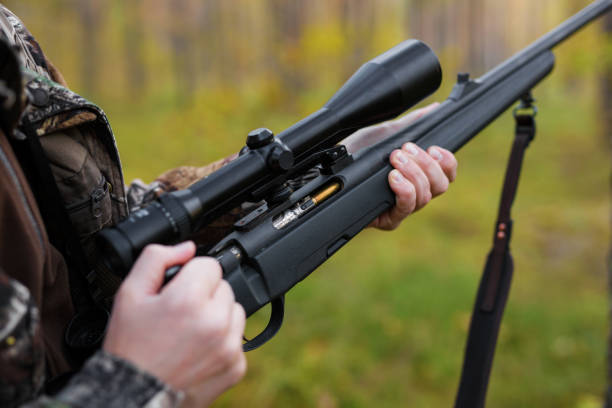
Hunter loading his gun Hunter loading his gun to shoot rifle stock pictures, royalty-free photos & images

Exploring the Best Deer Hunting Rifles for Big Game Success

Deer hunting requires a rifle that balances power, accuracy, and reliability. A well-chosen rifle can make the difference between a successful hunt and a missed opportunity. Below is a comprehensive guide to some of the best deer hunting rifles available in 2025, along with their standout features and considerations to help you choose the right option for your needs.

Key Features to Look for in a Deer Hunting Rifle

  • Caliber: Choosing the right caliber is critical for ensuring humane and effective performance. Common calibers for deer hunting include:
  • .243 Winchester – Ideal for beginners or hunters targeting smaller deer species.
  • .308 Winchester – A versatile caliber with excellent stopping power.
  • 6.5 Creedmoor – Known for its accuracy at medium-to-long-range distances.
  • Action Type: The choice between bolt-action, semi-automatic, or lever-action depends on your personal preference and hunting scenario.
  • Bolt-action rifles are highly reliable and accurate but may have slower follow-up shots.
  • Semi-automatic rifles provide faster follow-up shots but may sacrifice some precision.
  • Lever-action rifles offer a classic aesthetic while maintaining rapid cycling capability.
  • Weight: Lightweight rifles are easier to carry during long hunts but may have more recoil. Heavier models provide stability during shooting but can be cumbersome in rugged terrain.

Top Deer Hunting Rifles of 2025

Rifle Model Caliber Options Notable Features Approximate Price ($)
Browning X-Bolt Hunter .270 Win, .308 Win Durable walnut stock; smooth bolt action $1,100
Tikka T3x Lite .243 Win, 6.5 Creedmoor Lightweight design; adjustable trigger system $850
Ruger American Predator .308 Win, 6.5 Creedmoor Affordable; pre-threaded barrel for suppressors $600
Winchester Model 70 Multiple calibers Classic design; controlled round feed mechanism $1,300
Savage Axis II XP .30-06 Springfield Affordable combo package with scope included $500

Tips for Choosing Your Deer Hunting Rifle

  1. Match Your Terrain: For dense woodlands where shots are closer range (50-100 yards), consider shorter-barreled models that maneuver easily through thick brush. For open fields requiring long-range accuracy (200+ yards), opt for calibers like the 6.5 Creedmoor paired with longer barrels.
  2. Recoil Sensitivity: If you’re new to hunting or sensitive to recoil, select low-recoil calibers such as .243 Winchester or invest in recoil pads or muzzle brakes.
  3. Weather Resistance: Synthetic stocks and stainless steel barrels perform well under adverse weather conditions such as rain or snow.

Advantages of Bolt-Action Rifles in Deer Hunting

Bolt-action rifles remain one of the most popular choices among hunters due to their simplicity and precision advantages: – Minimal moving parts reduce potential mechanical failure during hunts. – Stable platform enhances accuracy at long ranges. – Greater availability of aftermarket customization options like improved triggers or optics mounting systems.

Final Thoughts on Selecting a Rifle

The best deer hunting rifle meets your specific preferences while ensuring ethical harvesting of game animals. Testing multiple options before committing will help you find a model that fits seamlessly into your style of hunting while delivering reliable performance season after season.

Whether you prefer traditional designs like the Winchester Model 70 or modern offerings such as the Ruger American Predator, there is no shortage of capable choices in today’s market designed specifically for success in big game pursuits.

Mountain Hunting Guns: Lightweight Rifles for Extreme Terrain

Hunting in mountainous terrain presents unique challenges that require specialized equipment, and choosing the right rifle is essential for success. Mountain hunting often involves long hikes at high elevations, steep inclines, and unpredictable weather conditions. Consequently, lightweight rifles designed for durability, precision, and portability are the preferred choice for serious hunters. Below, we explore key considerations for mountain hunting guns as well as some excellent options currently available.

Key Features of Mountain Hunting Rifles

  • Lightweight Construction: A lighter rifle reduces fatigue during long treks. Look for rifles under 7 pounds when possible.
  • Durable Materials: Opt for rifles with synthetic stocks or carbon-fiber components to withstand harsh weather conditions.
  • Precision and Range: Mountain hunting often requires shots at extended distances. Choose a rifle chambered in a flat-shooting caliber like .308 Winchester or 6.5 Creedmoor.
  • Weather Resistance: Rifles with stainless steel barrels or coated finishes provide protection against rain, snow, and humidity.
  • Compact Dimensions: Shorter barrels (20-22 inches) make it easier to maneuver through thick brush or over rugged terrain.

Popular Lightweight Rifles for Mountain Hunts

Rifle Model Weight (lbs) Barrel Length (inches) Notable Features
Kimber Mountain Ascent 4.8 22 Ultra-light design; stainless steel barrel
Weatherby Mark V Backcountry 2.0 5.3 20 Carbon fiber stock; Cerakote finish
Browning X-Bolt Pro 6.1 22 Fluted barrel; excellent accuracy
Christensen Arms Ridgeline 6.3 24 Carbon fiber barrel; versatile cartridge options

These rifles combine portability, precision performance, and rugged build quality to meet the demands of mountain hunting.

Caliber Considerations

  • 1.1 Creedmoor: Known for its long-range accuracy and manageable recoil.
  • 7mm Remington Magnum: Ideal for hitting targets at extended ranges while maintaining significant downrange energy.
  • .300 Winchester Magnum: Offers impressive power and versatility to handle various game species.
  • 6mm PRC (Precision Rifle Cartridge): Provides flatter trajectories suitable for mountainous environments.

Accessories to Enhance Your Rifle Setup

  1. Lightweight Scopes
    Optics such as the Leupold VX series or Swarovski Z3 provide optimal clarity without adding unnecessary weight.
  2. Bipods
    Compact bipods like those from Spartan Precision Equipment offer stability on uneven ground while being easy to carry.
  3. Sling Systems
    A durable yet comfortable sling can make traversing rough landscapes more manageable by evenly distributing weight across your shoulders.
  4. Protective Covers
    Utilize weather-resistant covers to safeguard your firearm from moisture and debris during transport.

Final Thoughts on Selecting a Mountain Hunting Rifle

Choosing the right lightweight mountain hunting gun is about balancing portability with reliable performance in unpredictable environments. Prioritize materials resilient enough to endure harsh conditions while ensuring your chosen caliber matches your intended range and target species requirements—ultimately enhancing both safety and success during your hunt in extreme terrains.

How We Test Rifles: A Comprehensive Guide to Evaluating Performance

When testing rifles, a systematic approach is critical to ensure accurate, unbiased evaluations. This guide outlines the key methods and criteria used by professionals to assess rifle performance across various categories. The goal is to determine reliability, accuracy, ergonomics, and overall suitability for specific shooting scenarios.

Key Testing Criteria

  1. Measured through group size at various distances (e.g., 100 yards, 300 yards).
  2. Bench rest shooting minimizes human error.
  3. Consistent ammunition is used to reduce variables.
  4. Evaluated under different environmental conditions (cold, heat, humidity).
  5. Includes firing several hundred rounds without cleaning.
  6. Records malfunctions or failures like misfeeds and ejection issues.
  7. Comfort during extended use.
  8. Ease of operation for features such as safety mechanisms, bolt cycling, and magazine changes.
  9. Weight distribution and balance.
  10. Assessed by the shooter during live fire.
  11. Impact on precision during rapid follow-up shots.
  12. Inspection of materials used in construction (e.g., barrel steel type, stock materials).
  13. Scratch tests and resistance to wear over time.
  14. Compatibility with aftermarket accessories such as scopes, bipods, and slings.
  15. Modular designs are favored in modern rifles.

Tools Used During Rifle Testing

Tool/Equipment Purpose
Chronograph Measures bullet velocity for consistency
Bench Rest Provides stability for accuracy tests
Torque Wrench Ensures proper scope mounting
Spotting Scope Observes shot placement at long range
Trigger Pull Gauge Tests trigger weight

Real-World Testing Scenarios

  1. Controlled Range Environment
    The rifle is tested at a controlled shooting range where environmental factors like wind are minimized. This allows precise evaluation of inherent rifle accuracy without interference from external factors.
  2. Field Conditions
    Rifles are taken into hunting or tactical environments where dirt, moisture, and temperature fluctuations come into play. This ensures the firearm can perform under real-world conditions.
  3. Long-Term Use
    Extended testing over weeks or months evaluates durability and performance consistency over time when subjected to repeated use.

Evaluation Process in Detail

  1. Fire multiple groups of five shots with different types of ammunition to identify potential load preferences.
  2. Test the rifle at various ranges to examine its effectiveness for both short- and long-distance shooting scenarios.
  3. Record all malfunctions using standardized terminology (e.g., stovepipe jams or double feeds).

These methods provide a thorough understanding of how a rifle will perform across varied use cases while maintaining an objective perspective on its strengths and limitations.

Gun wall rack with rifles Gun wall rack with rifles rifle stock pictures, royalty-free photos & images

Finding the Best Rifles for Sale: Christensen Arms Evoke Review

The Christensen Arms Evoke has garnered significant attention as a versatile, high-performance rifle designed for the modern hunter. Combining advanced materials, precise craftsmanship, and an emphasis on affordability, this rifle is well-suited for a wide range of hunting scenarios. This review explores its key features, specifications, benefits, and limitations to help you determine whether the Evoke is the right choice for your next hunting trip.

Key Features and Specifications

  • Action Type: Bolt-action
  • Barrel Material: Aerospace-grade carbon fiber-wrapped barrel for reduced weight
  • Stock: Carbon-fiber composite stock with ergonomic design for enhanced comfort
  • Caliber Options: Available in multiple calibers including .308 Winchester, 6.5 Creedmoor, and .300 Win Mag
  • Weight: Ranges from 6.3 to 7 pounds depending on configuration
  • Trigger: Adjustable match-grade trigger for improved accuracy
  • Accuracy Guarantee: Sub-MOA (Minute of Angle) guarantee with premium ammunition

Strengths of the Christensen Arms Evoke

  1. Lightweight Design
    The use of carbon fiber in both the barrel and stock significantly reduces overall weight without compromising durability. This makes it an excellent option for extended hunts or steep terrain where portability is essential.
  2. Versatility Across Hunting Scenarios
    With a broad range of caliber options available, hunters can customize the Evoke to suit various applications—from tracking whitetail deer in dense forests to pursuing larger game like elk or moose in open plains.
  3. Precision Engineering
    The adjustable match-grade trigger ensures crisp operation, while the sub-MOA accuracy guarantee provides confidence when taking longer shots at big game.
  4. Durability Under Harsh Conditions
    The aerospace-grade carbon fiber barrel resists corrosion and wear even under challenging environmental conditions such as rain or extreme temperatures.
  5. Affordable Price Point
    Despite incorporating high-end materials and advanced technology, the Evoke is priced competitively compared to other rifles in its class.

Potential Drawbacks

  • Some users may find that customization options (e.g., aftermarket accessories) are somewhat limited compared to more established bolt-action platforms.
  • Its lightweight build may result in slightly higher recoil with certain calibers like .300 Win Mag.
  • Shooters used to heavier traditional rifles may require an adjustment period when transitioning to this ultralight model.

Who Should Consider the Christensen Arms Evoke?

This rifle is ideal for hunters seeking a balance between performance and portability at an approachable price point. It particularly excels in situations that demand lightweight gear paired with precision shooting capabilities—such as mountain hunts or stalking big game across rugged terrains.

Feature Specification Benefit
Barrel Material Carbon-fiber wrapped Lightweight & corrosion-resistant
Caliber Options Multiple (.308 Win, 6.5 CM) Versatility across applications
Weight 6.3–7 pounds Easier handling in tough terrain
Accuracy Guarantee Sub-MOA Reliable long-range performance

By combining cutting-edge features like a carbon-fiber barrel with user-friendly adjustments at a reasonable cost, the Christensen Arms Evoke delivers value as an all-around hunting companion perfect for enthusiasts who demand quality without overspending on their firearm investment choices.

The Evolution of Modern Bolt-Action Rifles for Big Game and Precision

The modern bolt-action rifle has become a staple in both big game hunting and precision shooting. Its evolution over the decades reflects advancements in firearm technology, materials, and design. Combining reliability, accuracy, and versatility, these rifles continue to be the top choice for hunters and long-range shooters alike.

Key Features of Modern Bolt-Action Rifles

  • Precision Engineering: CNC machining ensures tight tolerances for consistent performance.
  • Enhanced Barrel Design: Free-floating barrels and match-grade steel improve accuracy.
  • Advanced Materials: Lightweight synthetic stocks, carbon-fiber components, and aerospace-grade aluminum reduce weight without sacrificing strength.
  • Smooth Bolt Operation: Improved bolt lugs and smoother cycling enhance reliability in critical situations.
  • Customizability: Many models feature modular designs that allow shooters to swap barrels, stocks, or optics with ease.

Advantages Over Other Rifle Platforms

Feature Benefit
Fewer Moving Parts Increased reliability in harsh environments.
Simplicity of Design Easier maintenance compared to semi-autos or lever-actions.
Superior Accuracy Fixed barrels ensure better shot consistency at long ranges.
Caliber Versatility Wide range of calibers available for different needs (e.g., .308 Win., 6.5 Creedmoor).

Unlike semi-automatic rifles where more moving parts can compromise precision, the mechanical simplicity of bolt-actions ensures optimal alignment between barrel and receiver.

Innovations Driving Modern Designs

  1. Carbon Fiber Barrels
    Carbon fiber-wrapped barrels reduce weight while dissipating heat efficiently, maintaining accuracy even during multiple consecutive shots.
  2. Adjustable Triggers
    Many modern models come with user-adjustable triggers that allow shooters to fine-tune pull weight based on preferences or operational requirements.
  3. Improved Ergonomics
    Stocks are now designed with advanced ergonomics in mind, offering better grip textures, adjustable comb heights, and recoil management systems for increased comfort during extended shooting sessions.
  4. Integrated Muzzle Devices
    Factory-threaded barrels now accommodate suppressors or muzzle brakes directly out of the box—a feature that’s particularly appealing for precision shooters aiming for reduced recoil or sound suppression.

Popular Applications

  • Big Game Hunting: Calibers like .300 Win Mag provide stopping power necessary for large animals such as elk or moose.
  • Long-Range Shooting Competitions: Rifles chambered in 6mm Creedmoor dominate events requiring pinpoint accuracy at distances beyond 1,000 yards.
  • Tactical Applications: Police marksmen often rely on bolt-actions due to their unmatched precision when engaging distant targets under controlled scenarios.

These applications demonstrate why bolt-action rifles remain indispensable despite advancements in other firearm platforms.

The modern iteration of the classic bolt-action rifle continues to evolve through innovation while staying true to its core strengths—accuracy, dependability, and adaptability across multiple disciplines. With advancements still underway in materials science and ballistics technology, it is clear these rifles will maintain their status as a cornerstone for hunters and marksmen alike into the future.


A Complete Guide to Choosing Beginner Rifles from an Online Store

A hunter prepares for a shot during a pronghorn antelope hunt in Wyoming. Wyoming has the world's largest pronghorn antelope population rifle stock pictures, royalty-free photos & images

Choosing the right rifle as a beginner can feel overwhelming due to the sheer number of options available. However, by focusing on your intended use, budget, and personal comfort, selecting the right firearm becomes much easier. This guide aims to simplify the process, offering practical advice for first-time buyers and shooting tips to get you started.

Factors to Consider When Buying Your First Rifle

  1. Determine what you’ll primarily use the rifle for. Is it for target shooting, hunting, or home defense?
  2. For small game hunting or learning precision, .22 LR rifles are an excellent starting point. For larger tasks like deer hunting, consider something chambered in .243 Winchester or .308 Winchester.
    • .22 LR: Ideal for plinking and small game hunting due to its low cost and minimal recoil.
    • 1.1 NATO/.1 Remington: A common choice for versatility in both target shooting and varmint hunting.
    • 2.2 Creedmoor: Known for accuracy and moderate recoil, this is a great option if you’re planning to shoot longer distances.
  3. Establishing a price range will help narrow your choices without compromising quality.
  4. Entry-level rifles such as the Ruger 10/22 or Savage Axis are affordable options that don’t sacrifice reliability.
  5. Ensure the rifle fits you properly by checking factors like weight, length of pull (the distance between the trigger and buttstock), and balance.
  6. Visit a local gun shop or range to test how various models feel in your hands.

Recommended Beginner Rifles

Rifle Model Caliber Ideal Use Approximate Price Range
Ruger 10/22 .22 LR Small game/target practice $300-$400
Savage Axis II Multiple (.243 Win, .308 Win) Hunting $400-$500
Smith & Wesson M&P 15-22 .22 LR Plinking/training $450-$550
Tikka T3x Lite Multiple (.223 Rem., 6.5 Creedmoor) Hunting/long-range shooting $700-$900

Shooting Tips for Beginners

  • Learn Proper Safety Practices: Always follow firearm safety rules—treat every firearm as if it’s loaded; keep your finger off the trigger until ready to shoot; never point at anything you’re not willing to destroy; be mindful of your target and what’s beyond it.
  • Start with Short Distances: Practice accuracy at shorter ranges (25-50 yards) before moving further out.
  • Master Basic Shooting Positions: Learn fundamental stances such as prone (lying down), seated, kneeling, and standing positions.
  • Use Quality Ammunition: Purchase reliable ammunition suited for your specific caliber—not all ammo will perform equally well in every firearm.
  • Seek Professional Training: Attending a basic firearms course can accelerate learning while ensuring safe practices from day one.

For a beginner shooter equipped with proper guidance on rifles and calibers that suit their needs best, entering the world of firearms can be an exciting journey filled with opportunities for growth in both skillset and confidence.

Top Rifles for Sale: Choosing the Best Calibers for Deer Hunting

When selecting a caliber for deer hunting, understanding the nuances of ammunition and how it matches your specific needs is essential. The right caliber ensures effective, ethical harvesting while considering factors like accuracy, power, and versatility. Here’s an in-depth exploration to help you decide on the best option.

Key Considerations When Choosing a Caliber

  1. Dense woods or short-range hunting areas may benefit from calibers optimized for closer distances and brush penetration.
  2. Open fields or long-range hunting scenarios require calibers with flat trajectories and longer ballistic reach.
  3. Whitetail deer generally require smaller calibers compared to larger species such as mule deer or red stag.
  4. Ensure the caliber you choose aligns with the average size of deer in your region.
  5. New hunters may prefer lower-recoil options to improve shot accuracy and comfort during extended sessions.
  6. High-power calibers tend to have more recoil but deliver greater stopping power.
  7. Many states have minimum caliber restrictions for ethical hunting practices, so verify local regulations before making a choice.

Popular Deer Hunting Calibers

.243 Winchester

  • Low recoil, ideal for beginners and youth hunters.
  • Excellent accuracy at medium ranges.
  • Versatile enough for small game when paired with lighter bullets.
  • Limited knockdown power at long ranges.
  • Not suitable for larger-bodied deer species.

.270 Winchester

  • Flat trajectory suited for long-range shots.
  • Moderate recoil compared to other high-power options.
  • Effective across diverse terrains, making it highly versatile.
  • May be overpowered in densely wooded environments.

.30-06 Springfield

  • Time-tested reliability as one of the most popular all-around hunting calibers.
  • Capable of handling any deer species with proper bullet selection.
  • Extensive availability of ammunition options and reload components.
  • Moderate-to-high recoil can be intimidating for newer shooters.

.308 Winchester

  • Exceptional balance between performance and recoil management.
  • Widely available ammunition with multiple bullet weight options.
  • Works well in both bolt-action rifles and semi-autos.
  • Slightly less powerful than larger calibers like .30-06 Springfield.

Comparative Table of Common Calibers

Caliber Recoil Level Effective Range Best Use Scenario Average Price (Per Round)
.243 Winchester Low Up to ~300 yards Youth/beginners; smaller-bodied deer $1-$2
.270 Winchester Moderate Up to ~500 yards Long-range/open field shots $2-$3
.30-06 Springfield Moderate-High Up to ~600 yards Versatility across all terrains $2-$3
.308 Winchester Moderate Up to ~500 yards General-purpose/all-around use $1.50-$3

Matching Caliber to Your Hunting Style

For shorter distances or heavily wooded areas: Opting for lower-recoil, medium-power rounds like the .243 Winchester allows precise shots without overpenetration risks in dense environments.

For long-range or open terrain: Larger calibers such as the .270 Winchester or .30-06 Springfield excel due to their flatter trajectories and stronger terminal performance at extended ranges.

For all-around use: If you’re uncertain about specific conditions or want flexibility across different hunts, consider the versatile nature of the .308 Winchester which provides balance without specialization trade-offs.

Selecting a suitable caliber isn’t just about power; it’s about aligning your choice with your skill level, environment, and ethical responsibility toward wildlife harvests.

The Best Calibers for Hunting: Choosing the Right One for Deer

Selecting the best caliber for deer hunting is crucial to ensure you can ethically and effectively harvest game. With a wide variety of calibers available, understanding which one suits your specific needs can make all the difference. Below, we’ll explore key factors to consider when choosing a caliber and highlight some of the most popular options.

Factors to Consider

  • Hunting Environment: Are you hunting in dense woods or open fields? Shorter ranges may require different calibers than long-distance shooting.
  • Recoil Tolerance: Newer hunters or those sensitive to recoil may prefer smaller calibers with lighter kick.
  • Ammunition Availability: Choose a caliber that is readily available or commonly stocked at stores, especially if you’re traveling to hunt.
  • Deer Size and Species: Larger deer species may require more stopping power than smaller ones, making caliber selection important based on your target game.

Popular Calibers for Deer Hunting

Caliber Effective Range Recoil Level Best Use Cases
.243 Winchester 200-300 yards Low Ideal for beginners and small-medium deer at moderate distances. Often used for youth hunters due to minimal recoil.
.270 Winchester 300-500 yards Moderate Great all-around option combining range and power; effective against larger-bodied deer in both open terrain and wooded areas.
6.5 Creedmoor 400+ yards Moderate Known for flat trajectory and accuracy at long ranges—perfect for experienced hunters targeting deer in open fields or plains.
.308 Winchester 300-400 yards Moderate to High Offers excellent stopping power; versatile enough for varied environments from forests to mountains.
.30-06 Springfield 400+ yards High A classic choice with exceptional power; often favored by experienced hunters tackling large-bodied deer or longer shots.

Matching Rifle Caliber with Game Ethics

Using the right caliber not only ensures better accuracy but also aligns with ethical hunting practices by promoting clean kills that minimize animal suffering. Overestimating a smaller-caliber round’s ability can lead to wounding rather than harvesting your quarry properly.

Some tips include:
1. Avoid underpowered rounds that may fail to penetrate vital organs effectively. 2. Test your rifle-ammo combination at various distances before taking it into the field. 3. Prioritize shot placement over size—accuracy consistently outweighs sheer bullet size.

Final Thoughts on Choosing the Right Caliber

Selecting a deer-hunting caliber depends largely on personal preference, skill level, and environmental factors where you’ll be hunting. Whether you’re using a lightweight .243 Winchester as a beginner or leveraging the versatile .308 Winchester on rugged terrain, taking time to research and test your equipment will help ensure success in the field while upholding ethical standards.

By carefully considering key elements such as recoil tolerance and effective range alongside game size, you’ll find a rifle-caliber pairing that matches both your proficiency level and specific hunting needs seamlessly.

Gun Case Ten rifles and shotguns lined up in a hunter's gun case. rifle stock pictures, royalty-free photos & images

Optics vs Rifles: Understanding Where to Invest Your Money in Shooting Gear

When it comes to shooting gear, one common question arises: Should you prioritize spending on a quality rifle or invest more in optics? While both are critical components of an effective shooting setup, understanding how to allocate your budget between the two can greatly impact your overall experience and performance. This guide will help you navigate this decision by breaking down important considerations and offering practical advice.

The Role of the Rifle

  • Purpose Matters: A hunting rifle will have different specifications than one intended for long-range target shooting or home defense.
  • Build Quality: Materials such as high-strength steel for barrels or synthetic stocks for durability directly impact the lifespan and performance of a rifle.
  • Customization: Many rifles allow for aftermarket modification (e.g., improved triggers or barrels), but consider whether these upgrades are necessary at purchase or something you’d add later.

Essentially, while having a good rifle is important, overspending without considering other factors like optics can limit your effectiveness.

The Role of Optics

  • Precision Shooting: For hunters or long-range shooters, a good scope enhances accuracy by providing magnification and reticle adjustments.
  • Adaptability Across Conditions: Modern scopes often feature advanced coatings for clarity in foggy or low-light conditions.
  • Ease of Use: A proper optic reduces eye strain and helps new shooters focus better on targets.

Investing in high-quality optics may provide greater value than upgrading from one mid-tier rifle to another without improving sighting systems.

Budget Allocation Recommendations

Use Case Rifle Priority Optics Priority Recommended Ratio
Long-Range Precision Moderate High 40% Rifle / 60% Optics
General Hunting Equal Equal 50% Rifle / 50% Optics
Short Range/Defense High Low 70% Rifle / 30% Optics

It’s clear that certain activities require higher investment into optics compared to others.

Practical Tips for Balancing Your Budget

  1. Start with the Basics: For beginners, it’s often better to buy an affordable yet reliable rifle paired with mid-range optics rather than overcommitting financially on either component.
  2. Upgrade Over Time: Many shooters begin with basic setups and gradually upgrade their gear as their skills develop.
  3. Research Compatibility: Ensure that your chosen scope mounts securely onto your rifle’s receiver system without causing alignment issues.
  4. Avoid Overpaying for Features You Don’t Need: Features like illuminated reticles may be unnecessary if most of your shooting occurs during daylight hours.

Choosing whether to prioritize rifles or optics ultimately depends on what you plan to do with your setup. By considering factors such as purpose, budget ratios, and individual priorities for precision or performance reliability, you can make an informed decision tailored specifically to your needs.

Optics vs Rifles: Understanding Where to Invest Your Money in Shooting Gear

When it comes to shooting gear, one of the most debated topics among hunters and sport shooters is whether to prioritize investing in a high-quality rifle or premium optics. Both are critical components of a successful shooting experience, but understanding how to allocate your budget can make all the difference. Below, we explore the key factors that can help you decide where your money is best spent.

The Importance of Quality Optics

Optics are often overlooked by beginners, but they play a crucial role in accuracy and overall shooting performance. Investing in quality optics can enhance your ability to acquire targets quickly and accurately, even at extended distances.

Key Benefits of High-Quality Optics:
Enhanced Accuracy: A good scope allows for precise adjustments, ensuring accuracy over various distances.
Low-Light Performance: High-quality lenses provide better light transmission for hunting during dawn or dusk.
Durability: Premium scopes are built to withstand harsh weather conditions and rugged use.
Magnification Options: Adjustable magnification ensures flexibility for both close-range and long-range shooting scenarios.

Feature Budget Scopes Premium Scopes
Light Transmission Low High
Build Materials Basic Aluminum Aircraft-grade Aluminum/Titanium
Adjustment Precision Limited Advanced
Weatherproofing Minimal Fully Waterproof & Fogproof

Why Rifles Still Matter

While optics are essential, they cannot compensate for a poorly made rifle. The reliability, ergonomics, and overall build quality of your firearm substantially impact your performance on the range or in the field.

Considerations When Choosing a Rifle:
1. Intended Use: Determine whether the rifle will be used for hunting, sport shooting, or personal defense. 2. Build Quality: Look for rifles with durable materials such as stainless steel barrels and synthetic stocks. 3. Ergonomics: A rifle should feel comfortable to hold and operate over extended periods. 4. Action Type: Bolt-action rifles are ideal for precision shooting; semi-automatics work well for faster follow-up shots.

Allocating Your Budget

  1. If you’re a beginner: Start with a reliable mid-range rifle paired with moderately priced optics. This allows you to upgrade your gear later as skills improve.
  2. For experienced shooters: Consider investing in premium optics if you already own a high-quality rifle that meets your needs.
  3. Hunting-specific gear: Prioritize optics that perform well in low-light conditions since many hunting opportunities occur at dawn or dusk.
Budget Range Rifle Focus Optic Focus
Under $1000 $600 Rifle / $400 Scope $500 Rifle / $500 Scope
$1500-$2000 $1000 Rifle / $800 Scope $1200 Rifle / $800 Scope
Over $3000 Balanced Investment Balanced Investment

Final Thoughts on Investing Wisely

The decision between prioritizing optics or rifles ultimately depends on individual needs and objectives as a shooter. Remember that both components work together as a system—investing wisely in both areas will help you achieve greater accuracy, confidence, and satisfaction during every outing at the range or in the field. Always test equipment before purchasing whenever possible to ensure compatibility with your specific requirements.

Balancing Tradition, Responsibility, and Conservation When You Buy Rifles Online

Hunting has long been a cultural tradition in many parts of the world, deeply rooted in history and community. However, ethical hunting is more than just adhering to laws and regulations—it requires a mindful approach that respects wildlife, ensures sustainability, and considers the broader ecosystem. Below is an exploration of key principles that underline the balance of tradition, responsibility, and conservation in hunting ethics.

Understanding Hunting Ethics

Hunting ethics encompass values and practices that prioritize respect for nature, fair chase principles, and responsible use of natural resources. Ethical hunters not only comply with legal requirements but also follow unwritten codes that maintain the integrity of hunting as a practice. These include:
Fair Chase: Ensuring animals have a reasonable chance to escape by avoiding unethical methods such as baiting or spotlighting where prohibited.
Selective Harvesting: Targeting mature animals while leaving younger or breeding individuals to sustain populations.
Minimizing Suffering: Using appropriate calibers and shot placement to ensure quick, humane kills.

Balancing Tradition with Modern Practices

Hunting traditions often serve as a cultural connection to our ancestry. However, modern technology and scientific knowledge have reshaped how hunting is practiced today. Striking this balance involves integrating tradition with advancements in gear or conservation science while respecting historical methods.

Examples of Traditional vs Modern Practices:

Traditional Practices Modern Innovations
Handcrafted wooden bows Compound bows with precision engineering
Reliance on tracking skills Use of GPS devices for navigation
Family-taught techniques Access to professional training programs

Responsible hunters embrace innovation without compromising ethical standards or losing sight of the traditional values tied to hunting.

Responsibility Towards Wildlife

Hunters bear significant responsibility toward wildlife conservation. Without careful stewardship, overharvesting can lead to declining animal populations or even extinction risks for certain species.

Key responsibilities include:
Understanding Local Ecosystems: Hunters should familiarize themselves with local wildlife behavior, population sizes, migration patterns, and habitat health before engaging in any activity. – Licensing & Regulations: Always follow seasonal restrictions set by state or regional agencies designed to protect breeding cycles and prevent overhunting. – Reporting Data: Many conservation programs rely on hunter-provided data such as harvest numbers for effective wildlife management plans.

Conservation Efforts in Hunting

Modern ethical hunters often contribute directly to conservation through various measures:
1. Habitat Preservation – Supporting organizations focused on restoring forests or wetlands critical for animal survival.
2. Funding Through Licensing Fees – Purchasing licenses often contributes directly towards wildlife management programs via government agencies. 3. Volunteering for Cleanup Initiatives – Removing litter from public lands ensures pristine environments for future generations.

A Shared Duty Toward Sustainability

Ultimately balancing hunting ethics means understanding its ripple effects far beyond personal experience—it connects humans deeply with ecology at large while fostering respect between communities sharing similar outdoor passions globally.


Comparing Bolt-Action and Semi-Auto Rifles for Sale: Precision and Performance Insights

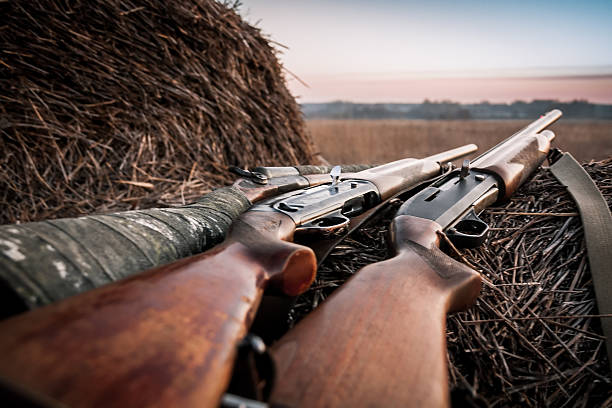
Hunting shotguns on haystack during sunrise in expectation of hunt Hunting shotguns on haystack while halt during sunrise, soft focus on shutgun butt. Main focus is on breech block rifle stock pictures, royalty-free photos & images

When selecting a rifle, understanding the differences between bolt-action and semi-automatic systems is crucial. Each rifle type offers distinct advantages depending on your application, whether it’s hunting, target shooting, or tactical use. Below is an in-depth discussion on their precision and performance characteristics.

Precision

Bolt-Action Rifles:
– Renowned for their exceptional accuracy due to their simpler mechanics.
– The solid lock-up mechanism reduces movement during firing, minimizing vibrations and improving shot-to-shot precision.
– Fewer moving parts means less mechanical noise, which is beneficial for hunters trying to remain stealthy in the field.

Semi-Auto Rifles:
– While modern semi-auto rifles have significantly improved in accuracy, they generally lag behind bolt-actions in terms of absolute precision at long ranges.
– The semi-auto mechanism introduces additional vibrations due to the cycling of the action, which can slightly affect shooting consistency over long distances. – Ideal for rapid follow-up shots when minor adjustments are acceptable.

Performance

Bolt-Action Rifles:
1. Simplicity of Design: Fewer moving parts make bolt-action rifles more mechanically reliable and easier to maintain over time. 2. Loading Capacity: Typically feature lower magazine capacities (usually 3–5 rounds), making them less suited for high-volume shooting scenarios. 3. Rate of Fire: Slower rate of fire since each round must be manually cycled by operating the bolt.

Semi-Auto Rifles:
1. Speed Advantage: Semi-auto rifles offer much faster follow-up shots as they automatically chamber the next round upon firing. 2. Loading Capacity: Options for higher-capacity magazines make these rifles better suited for tactical scenarios or competitive shooting events. 3. Versatility in Application: Often preferred for varmint control or situations requiring multiple shots on target within seconds.

Use Cases

Rifle Type Best Applications Key Advantages
Bolt-Action Long-range hunting (e.g., elk, deer), precision target shooting Superior accuracy, reliability
Semi-Automatic Tactical environments, competitive shooting events, small-game hunting (e.g., varmints) Higher rate of fire, faster follow-up shots

Ergonomics

Both rifle types differ significantly in ergonomics: 1. Bolt-action rifles often have a more traditional feel with fewer controls to manage. 2. Semi-autos usually feature more customizable designs with modern attachments such as red dot sights or foregrips.

Each shooter must weigh these factors carefully based on their specific needs and intended use cases.

Bolt-Action vs. Semi-Auto Rifles: Where to Buy Rifles Online and Compare Reliability

When selecting a rifle, reliability and long-term performance often determine whether a shooter opts for a bolt-action or semi-automatic platform. Both types of rifles have unique characteristics that cater to specific needs, shooting environments, and maintenance preferences. Below is an in-depth analysis of how these two platforms compare in terms of reliability and durability.

Bolt-Action Rifles:

  • Manual Operation: Bolt-action rifles rely on the manual cycling of the bolt to load and eject cartridges. This design reduces the likelihood of mechanical failures caused by fouling or improper cycling.
  • Simpler Mechanism: Fewer moving parts result in enhanced durability over time. This simplicity allows bolt-action rifles to perform reliably under challenging conditions such as exposure to dirt, mud, or sand.
  • Consistent Chamber Sealing: The locking lugs on a bolt-action rifle create a tight chamber seal, which can improve ignition consistency even when using ammunition with slight variances.

Semi-Auto Rifles:

  • Gas System Functionality: Semi-auto rifles use gas-operated or recoil-driven systems to cycle rounds automatically. While efficient, this system can be susceptible to fouling over extended use without proper maintenance.
  • Higher Rate of Fire: The ability to quickly fire multiple rounds makes semi-autos ideal for certain scenarios; however, sustained rapid-fire increases the risk of overheating.
  • Complex Mechanisms: More components mean more potential failure points compared to bolt-action rifles.

Durability:

Feature Bolt-Action Rifles Semi-Auto Rifles
Moving Parts Minimal Moderate to High
Resistance to Harsh Environments Superior Can be compromised
Wear Over Time Slower Faster due to higher usage rates

Bolt-action rifles are generally recognized for their longevity due to their robust and simplistic design. Semi-auto rifles may experience faster wear due to increased moving parts but remain dependable when maintained properly.

Maintenance Requirements:

  1. Require less frequent cleaning.
  2. Basic field-stripping processes make them easy for owners with minimal experience.
  3. Less prone to malfunctions caused by accumulated debris.
  4. Require regular cleaning of the gas system and chamber area due to carbon buildup.
  5. More complex disassembly steps necessitate familiarity with the rifle’s design.
  6. Higher likelihood of requiring replacement parts over time (e.g., recoil springs).

Best Uses for Bolt-Action Rifles:

  • Long-range precision shooting where consistent accuracy is critical.
  • Hunting in rugged environments where exposure to dirt or moisture is unavoidable.
  • Scenarios requiring minimal reliance on external factors like lubrication or clean operating conditions.

Best Uses for Semi-Automatic Rifles:

  • Tactical situations where quick follow-up shots are important.
  • Competitive shooting disciplines that demand faster rates of fire.
  • Recreational shooting involving moderate distances and high volumes of ammunition.

Final Thoughts on Selecting the Right Platform

The choice between a bolt-action or semi-auto rifle depends largely on intended use, environmental conditions, and personal maintenance preferences. While bolt-actions shine in terms of simplicity, durability, and reliability under adverse conditions, semi-autos excel in speed, versatility, and efficiency when used appropriately and well-maintained. Each platform brings distinct advantages tailored for specific demands—making it essential for shooters to carefully assess their priorities before making a decision.

Bolt-Action vs. Semi-Auto Rifles: Reliability and Long-Term Performance Comparison

When selecting a rifle, understanding the reliability and long-term performance of bolt-action and semi-auto designs is crucial for making an informed decision. Both types of rifles have their strengths and weaknesses, which can significantly influence their suitability for different applications.

Reliability in Functionality

Bolt-Action Rifles
Simpler Mechanism: Bolt-action rifles operate with a straightforward manual cycling system, making them inherently reliable. The shooter manually ejects spent cartridges and chambers the next round by manipulating the bolt. This reduces the chances of mechanical failure. – Fewer Moving Parts: With fewer components involved in operation, bolt-action rifles are less prone to malfunction caused by dirt, debris, or wear over time.
Performance in Adverse Conditions: These rifles excel in harsh conditions such as rain, mud, or snow due to their simplicity.

Semi-Automatic Rifles
Complex Mechanism: Semi-auto rifles cycle automatically using gas or recoil systems. While faster and more convenient than bolt-actions, they rely on precise timing and multiple moving parts that may be vulnerable to fouling or wear. – Environmental Sensitivity: Dust, dirt, or extreme weather can interfere with semi-auto functionality if not properly maintained. Regular cleaning is essential to ensure reliability. – Higher Rate of Fire: Though faster shooting speeds offer advantages in some scenarios (e.g., competition shooting), this capability introduces additional strain on internal mechanisms during extended use.

Durability Over Time

Feature Bolt-Action Rifles Semi-Auto Rifles
Longevity Often outlast semi-autos due to reduced wear on components Slightly shorter lifespan due to increased mechanical complexity
Maintenance Requirements Minimal; basic cleaning suffices Requires frequent cleaning and part replacement
Barrel Life Typically longer due to lower firing rates Barrel may degrade faster with rapid-fire use

Maintenance Considerations

  1. Bolt-action rifles are easy to disassemble and clean thoroughly.
  2. Semi-autos require more effort for disassembly because of their intricate mechanisms.
  3. A bolt-action rifle can endure long periods without maintenance while still functioning reliably.
  4. Semi-auto designs demand consistent cleaning after use — particularly if exposed to dirty environments.
  5. Bolt-action mechanisms rarely need part replacements under regular use.
  6. With semi-autos, high-wear parts such as springs and extractors will likely need periodic replacement.

Key Takeaways

Bolt-action rifles emphasize simplicity, ruggedness, and longevity at the cost of slower operation. These qualities make them ideal for precision shooting or hunting in challenging environments where reliability is paramount.

Semi-auto rifles provide higher rates of fire and quicker follow-up shots but require diligent maintenance to ensure consistent performance over time. They are well-suited for tactical operations or scenarios demanding speed without sacrificing accuracy.

By weighing these factors against your specific needs—whether for hunting trips in remote areas or range practice—you can select the rifle type that aligns best with your priorities regarding reliability and durability.

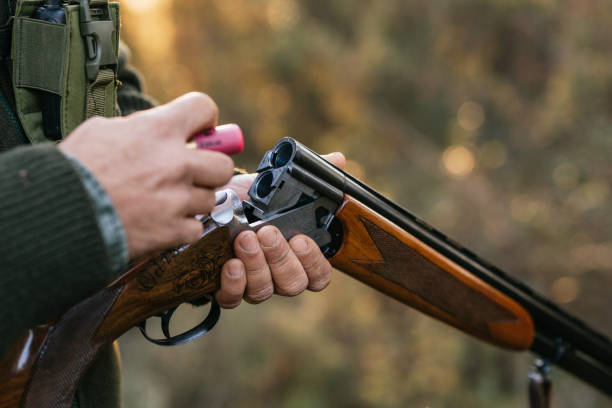
Hunter man loading his gun while hunting outdoors. Hunter man loading his gun while hunting outdoors. Hunting season concept. rifle stock pictures, royalty-free photos & images

Types of Game: Matching the Right Rifle to Your Hunting Goals

When selecting a rifle for hunting, understanding the type of game you wish to pursue is crucial. Different animals require different calibers, rifle types, and configurations to ensure ethical harvesting and optimal performance. Below is an overview of key considerations for matching the right rifle to your specific hunting goals.

Small Game Hunting

  • Recommended Calibers: .22 LR, .17 HMR, or .22 WMR.
  • Ideal Rifles: Small-caliber bolt-action or semi-automatic rifles. These offer precision while minimizing overkill on smaller targets.
  • Key Features: Lightweight and compact designs make it easier to carry through dense woods or tight spaces where small game resides.

Medium Game Hunting

  • Recommended Calibers: .243 Winchester, 6.5 Creedmoor, .308 Winchester.
  • Ideal Rifles: Bolt-action rifles are popular due to their accuracy at medium-to-long ranges; however, semi-auto options can be useful in areas where quick follow-up shots may be necessary (e.g., feral hogs).
  • Key Features: A scope with adjustable magnification helps with precise targeting at varying distances. Additionally, moderate weight ensures stability without causing fatigue during long hunts.
Caliber Effective Range Typical Use Cases Rifle Type Recommendation
.243 Winchester Up to 300 yards Deer and antelope Bolt-action preferred
6.5 Creedmoor Up to 500 yards Long-range deer hunts Bolt or semi-auto
.308 Winchester Up to 600 yards Medium-to-large game Bolt-action recommended

Large Game Hunting

  • Recommended Calibers: .30-06 Springfield, .300 Win Mag, or larger rounds like the .338 Lapua Magnum for long-range precision on rugged terrain.
  • Ideal Rifles: Heavy-duty bolt-action rifles equipped with high-quality optics are most effective in these scenarios.
  • Key Features:
    • High-energy cartridges capable of penetrating thick hides and bone.
    • Durable stock materials (e.g., synthetic) designed for harsh environments.
    • Muzzle brakes or recoil pads may be considered for high-recoil calibers.

Upland Bird and Waterfowl Hunting

While shotguns are traditionally used for bird hunting due to their spread pattern and short-range effectiveness, some small-caliber rifles may occasionally be used for specialized situations involving upland birds.

Carefully consider the species you’re pursuing alongside your hunting environment when choosing a rifle setup. Matching your rifle’s capabilities with your quarry ensures not only success but also respectfulness toward wildlife through ethical harvesting practices.

Cold Weather Performance: Evaluating Rifles Built for Extreme Conditions

When hunting or shooting in cold weather, having a rifle that is specifically designed or proven to perform under extreme conditions is critical. Cold temperatures can introduce challenges such as material brittleness, lubricant thickening, and reduced battery performance for optics. Understanding these factors and selecting a rifle that excels in cold environments can make the difference between success and failure.

Key Features of Cold-Weather Rifles

  • Material Durability: Rifles constructed from high-grade steel or alloy that resist brittleness in sub-zero temperatures are ideal. Synthetic stocks are often preferred over wooden ones due to their resistance to warping.
  • Corrosion Resistance: Snow, ice, and freezing rain can accelerate rust formation. Rifles with corrosion-resistant coatings like Cerakote or stainless steel components perform better in wet and icy environments.
  • Minimal Lubricant Dependency: Cold conditions cause standard lubricants to thicken, leading to malfunctions. Cold-weather rifles often recommend lightweight synthetic oils specifically formulated not to gum up.

Cold Weather Rifle Recommendations

Rifle Model Action Type Key Features Notable Strengths
Tikka T3x Arctic Bolt-action Synthetic stock, phosphate finish High durability and adaptability
Ruger American Predator Bolt-action Lightweight design, ergonomic stock Excellent reliability at low weight
Daniel Defense M4 V7 Semi-auto (AR-15) Free-floating barrel, coated BCG Dependable semi-auto functionality

Each of these rifles has been tested in harsh environments and offers reliable performance despite freezing conditions.

Tips for Maintaining Your Rifle in Extreme Cold

  1. Use Low-Viscosity Lubricants: Replace standard gun oil with cold-weather-specific options.
  2. Keep Moving Parts Dry: Moisture can freeze on moving components like the bolt or trigger assembly.
  3. Avoid Sudden Temperature Changes: Transitioning from a heated area to the outdoors can cause condensation buildup inside your rifle.
  4. Check Optics Batteries: Lithium batteries work better than alkaline types at sub-zero temperatures.

Testing Your Rifle Before the Hunt

  1. Test cycling the action with gloves on.
  2. Fire multiple rounds after leaving the rifle outside overnight.
  3. Inspect parts for signs of thickened grease or sluggish movement.

Selecting the right equipment and maintaining it carefully will ensure your firearm stays reliable when you need it most during extreme weather adventures.


Exploring the Best Bolt Action and Semi-Automatic Rifles for Sale

Weapons and military equipment for army, Assault rifle gun (M4A1) and pistol on camouflage background. Weapons and military equipment for army, Assault rifle gun (M4A1) and pistol on camouflage background. rifle stock pictures, royalty-free photos & images

When selecting a rifle, understanding the key differences between bolt action and semi-automatic designs is crucial. These two types of rifles serve distinct purposes and cater to different user preferences, making it essential to evaluate their features, performance, and suitability for various scenarios.

Bolt Action Rifles

  • Mechanical Simplicity: Fewer moving parts result in easier maintenance and improved durability.
  • Accuracy: The stable design provides exceptional precision, making them ideal for long-distance shooting.
  • Caliber Variety: Available in a wide range of calibers suited for hunting, target shooting, and tactical applications.
  • Slower Rate of Fire: Since each round must be chambered manually, firing rate is significantly reduced compared to semi-automatic rifles.

Bolt action rifles are widely used in hunting because they allow accurate placement of shots over long distances. Hunters often prefer this type due to its dependability in harsh environmental conditions.

Semi-Automatic Rifles

  • Faster Rate of Fire: Enables quicker follow-up shots compared to bolt action firearms.
  • Ease of Use: Does not require manual operation after each shot—ideal for beginners or those requiring rapid engagement.
  • Versatility: Often designed with modular components that allow customization (e.g., optics or grips).
  • Slightly Less Precision: While still accurate, semi-autos may not match the pinpoint precision of bolt actions due to slight mechanical variances.

Semi-automatics are commonly favored in tactical scenarios and competitive shooting events where speed is paramount. They also appeal to recreational shooters who value convenience.

Comparing Bolt Action vs. Semi-Automatic

Feature Bolt Action Semi-Automatic
Rate of Fire Slower (manually operated) Faster (self-loading mechanism)
Accuracy Superior for long-range precision Slightly less precise overall
Reliability Extremely reliable under harsh conditions Generally reliable but prone to malfunctions if not maintained
Maintenance Complexity Easy Moderate
Use Case Hunting, sniping Tactical scenarios, competitive shooting

Choosing Based on Application

  1. Opt for a bolt action rifle if precision over long ranges is critical.
  2. A semi-automatic rifle may be better suited due to its speed and ease of handling during high-pressure situations.
  3. Both options can work well depending on personal preference; however, semi-autos offer more flexibility with rapid firing.

Understanding these distinctions allows prospective buyers to make informed decisions based on their unique requirements while appreciating the strengths each design brings to the table.

A Comprehensive Guide to Buy Rifles Online and Understand How They Work

Rifles are precision-engineered firearms designed for accuracy and versatility. To understand their mechanics, it’s important to break them down into their core components and functions. Here’s a detailed look at how rifles operate and the principles that govern their performance.

Core Components of a Rifle

  1. A long metal tube through which the bullet travels.
  2. Features rifling grooves that impart spin to the bullet for increased accuracy.
  3. Houses the mechanism that loads, fires, and ejects cartridges.
  4. Can be categorized into different types such as bolt action, lever action, pump action, or semi-automatic.
  5. The part held by the shooter to stabilize the rifle.
  6. Often made of wood, synthetic materials, or laminate for durability.
  7. The trigger initiates the firing sequence.
  8. Includes safety mechanisms to prevent accidental discharge.
  9. Stores ammunition and feeds it into the chamber via the action.
  10. Allow shooters to aim accurately at targets.
  11. May include iron sights, telescopic sights (scopes), or red-dot optics.

Key Mechanisms in Rifle Operation

  1. Loading
    Cartridges are manually placed into the magazine or chamber depending on the type of rifle.
  2. Chambering
    In bolt-action rifles, this involves manually cycling a round from the magazine into the chamber using a bolt handle. In semi-automatics, this process is automatic upon pulling back and releasing the charging handle.
  3. Firing
    Pulling the trigger releases a firing pin or striker that strikes a primer on the cartridge base. This ignites gunpowder inside the cartridge casing.
  4. Bullet Propulsion
    The rapid expansion of gases from burning gunpowder propels the bullet forward through the barrel at high velocity while imparting spin due to rifling grooves.
  5. Extraction & Ejection
    After firing, spent casings are removed (extracted) from the chamber and ejected out of a port via mechanical means such as springs or gas systems in automatic models.
  6. Reset & Reloading
    Semi-automatic rifles automatically reset their mechanisms for subsequent shots by utilizing gas pressure or recoil energy to cycle new rounds from magazines.

Table: Manual vs Automatic Cycling

Feature Bolt Action Semi-Automatic
Cycling Method Manual (via bolt handle) Automatic (gas/recoil-driven)
Rate of Fire Slower Faster
Maintenance Complexity Lower Higher
Ammunition Efficiency High Medium

Advantages of Rifled Barrels

  • Increased Accuracy: The spin stabilizes bullets during flight.
  • Extended Range: Enhanced stability allows bullets to travel farther without significant deviation.
  • Consistent Performance: Repeated shots exhibit predictable trajectories under similar conditions.

Understanding these mechanics allows users to better appreciate how rifles deliver precision and power consistently across various applications like hunting, target shooting, and tactical scenarios while highlighting differences between manual models like bolt-action rifles versus semi-automatics that rely on automation for speed and convenience. Proper maintenance further ensures reliability across all mechanical components over time.

Understanding Recoil and Accuracy When Shopping at a Rifles Online Store

Recoil plays a significant role in how a rifle performs and how accurately it can be fired. Understanding the mechanics of recoil, its effect on shooting accuracy, and ways to mitigate it is essential for both novice and experienced shooters.

What Is Recoil?

Recoil, often referred to as “kick,” is the backward force generated when a rifle is discharged. According to Newton’s Third Law of Motion, every action has an equal and opposite reaction. When a bullet is fired, the pressure that propels the bullet forward also pushes the rifle backward into the shooter’s shoulder.

The amount of recoil experienced depends on several factors: – Rifle Caliber: Larger calibers produce higher recoil due to increased energy required to propel heavier projectiles. – Rifle Weight: Lighter rifles tend to generate more felt recoil as there is less mass to absorb energy. – Ammunition Load: High-powered cartridges result in stronger recoil forces. – Stock Design and Fit: Poorly designed or ill-fitting stocks may amplify perceived recoil.

Effects of Recoil on Accuracy

Excessive or poorly managed recoil can significantly impact shooting accuracy in several ways: 1. Shooter Anticipation: Many shooters unconsciously flinch or tense up before pulling the trigger, anticipating the impact of recoil. This movement can result in shots being off-target. 2. Follow-Up Shots: In rapid-fire or semi-automatic scenarios, heavy recoil disrupts sight alignment, making accurate follow-up shots more challenging. 3. Fatigue Over Time: Prolonged shooting sessions with high-recoil rifles can cause shoulder fatigue or discomfort, leading to diminished accuracy over time.

How to Reduce Recoil

  1. Use a Muzzle Brake or Compensator – These devices redirect gasses expelled from the barrel after firing, counteracting rearward force. – Pros: Effective at reducing felt recoil and muzzle rise. – Cons: Increased noise levels for nearby shooters.
  2. Opt for a Heavier Rifle – Additional weight in a rifle helps absorb some of the energy produced during firing. – This approach is particularly effective for target shooting but may not be ideal for hunting due to reduced portability.
  3. Select Low-Recoil Ammunition – Reduced-recoil loads are available for many calibers, offering sufficient performance without excessive kick.
  4. Install a Recoil Pad – A padded buttstock cushion can effectively reduce impact on your shoulder. – Common materials include rubber or gel inserts that absorb shock.
  5. Practice Proper Shooting Technique – Ensure your stance is stable with feet shoulder-width apart. – Pull the rifle snugly into your shoulder pocket before firing; this reduces perceived impact by dispersing force across your body.

Table: Comparison of Calibers by Felt Recoil

Caliber Felt Recoil (ft-lbs) Typical Applications
.22 LR 0 Target shooting / Small game
.223 Remington ~3 Varmint hunting / Home defense
.308 Winchester ~15 Big game hunting / Long-range use
.300 Win Mag ~30 Large game hunting

Final Thoughts on Managing Recoil

Effectively managing recoil ensures better control over your firearm and allows you to focus on precision rather than discomfort or distraction. By combining proper equipment choices with sound technique, shooters can mitigate its effects—resulting in improved overall performance and accuracy during any type of firearm activity.

Common Rifle Malfunctions and How to Address Them Effectively

Rifles, like any mechanical device, are prone to occasional malfunctions. Understanding the most common issues and knowing how to address them can help ensure reliability and prolong the life of your firearm. Below, we’ll explore frequent rifle malfunctions, their causes, and effective methods for resolving them.

1. Failure to Feed

A failure to feed occurs when a cartridge does not properly enter the chamber during cycling.

Causes: – Dirty or damaged magazine
– Weak magazine spring
– Improper ammunition dimensions
– Excessive fouling or debris in the action

Solutions: – Inspect and clean your magazines regularly. Replace any that show signs of damage or wear. – Use high-quality ammunition that adheres to standard specifications. – Clean the rifle’s action thoroughly to remove fouling or debris. – Consider replacing worn-out magazine springs.

2. Failure to Fire

This malfunction happens when the trigger is pulled, but the cartridge fails to ignite.

Causes: – Faulty primer on the cartridge
– Firing pin issues (e.g., broken or obstructed)
– Insufficient firing pin strike due to weak hammer spring

Solutions: – Check for proper primer placement and use reliable ammunition brands. Avoid old or poorly stored ammo. – Disassemble and inspect the bolt assembly for firing pin damage or obstructions. – If necessary, replace weak hammer springs with factory-recommended parts.

3. Failure to Eject (“Stovepipe”)

A failure to eject occurs when an empty casing becomes stuck in the ejection port instead of being cleanly expelled.

Causes: – Worn-out extractor claw
– Weak ejector spring
– Improper lubrication in cycling components

Solutions: – Inspect and replace worn extractor components as needed. – Ensure proper lubrication of moving parts using firearm-specific lubricants. – Test different types of ammunition if ejection problems persist.

4. Bolt Not Closing Completely

This issue arises when the bolt does not lock fully into place, preventing proper chambering of a round.

Causes: – Dirty chamber causing friction
– Damaged bolt lugs or debris interfering with locking surfaces
– Overly tight tolerances due to improper barrel seating

Solutions: | Step | Action Required | |———-|——————–| | Clean | Thoroughly clean both the chamber and locking lug areas using appropriate tools. | | Inspect | Examine bolt lugs for any signs of wear or damage; repair if necessary. | | Verify Fit | Confirm proper alignment between barrel extension and chamber area during assembly.|

Preventative Maintenance Tips

  1. Regularly clean your barrel, action, magazine well, and other critical areas after each use.
  2. Check wear-prone parts such as extractors, springs, and firing pins periodically.
  3. Store firearms in a dry environment with controlled humidity levels to prevent rusting.

By addressing these malfunctions proactively through maintenance practices and timely repairs, you can maximize both reliability and accuracy while ensuring safe operation under various conditions.

AR 15 AR 15 with ammunition laying near it. rifle stock pictures, royalty-free photos & images

The Role of Cartridges in Rifle Performance and Versatility

Cartridges are an essential component of rifle performance as they directly impact the firearm’s accuracy, power, recoil, and overall versatility. Understanding the role cartridges play is vital for selecting a rifle suited to your needs—whether for hunting, target shooting, or tactical applications.

Components of a Cartridge

  • Case: Usually made from brass, steel, or aluminum, the case holds all other components together.
  • Primer: This small component ignites the powder when struck by the firing pin.
  • Propellant (Gunpowder): The energy source that creates expanding gases to propel the bullet forward.
  • Projectile (Bullet): The portion that leaves the barrel and impacts the target.

Cartridge Caliber and Rifle Compatibility

Caliber Typical Use Cases Notable Examples
.22 LR Small game hunting, target shooting Ruger 10/22
.223 Remington Varied uses including varmint hunting AR-15 platforms
.308 Winchester Big game hunting, precision shooting Bolt-action rifles like Remington 700
6.5mm Creedmoor Long-range shooting Precision rifles

How Cartridges Influence Performance

  1. Accuracy
    The bullet’s weight and shape affect its trajectory and stability in flight. For instance:
  2. Lighter bullets typically have flatter trajectories but are more susceptible to wind drift.
  3. Heavier bullets maintain momentum better at longer ranges.
  4. Recoil
    The amount of gunpowder and bullet weight significantly influence recoil:
  5. Low-recoil cartridges like .223 Remington are ideal for beginners or high-volume shooters.
  6. Higher-recoil options such as .300 Winchester Magnum deliver greater power but require more skill to control effectively.
  7. Power and Penetration
    Cartridges designed with high powder charges and heavier bullets provide increased energy transfer upon impact, making them suitable for large game or defensive scenarios.
  8. Versatility
    Some cartridges are highly versatile due to their balanced characteristics:
  9. The .308 Winchester is widely used across hunting, competition shooting, and military applications.
  10. The 6.5mm Creedmoor excels in long-range precision without excessive recoil.

Matching Cartridges with Scenarios

  • Hunting: Larger calibers like .30-06 Springfield provide sufficient stopping power for big game such as deer or elk.
  • Target Shooting: Small calibers like .22 LR offer affordability, low recoil, and precise accuracy at shorter ranges.
  • Long Range Shooting: High ballistic coefficient options like 6.5mm Creedmoor excel at maintaining accuracy over extended distances.

Selecting the appropriate cartridge ensures optimal performance from your rifle based on your specific needs. By understanding how each component works together within a cartridge system, you can make informed decisions tailored to various scenarios while maximizing both efficiency and safety during use.

Comparing the Performance of Bolt-Action and Semi-Automatic Rifles in Various Scenarios

Understanding the performance of bolt-action and semi-automatic rifles across different scenarios is essential for shooters, hunters, and enthusiasts alike. Each rifle type offers distinct advantages and disadvantages based on its design, mechanics, and intended purpose. Below is a comparison of how these two types perform in various contexts.

Hunting Applications

Bolt-Action Rifles: – Known for their accuracy and precision, especially at long ranges. – Ideal for hunting larger game where a single accurate shot is critical. – Simpler mechanisms make them highly reliable in outdoor conditions like rain or dust. – Tend to use larger calibers suitable for taking down big game animals.

Semi-Automatic Rifles: – Offer faster follow-up shots, which can be advantageous when hunting smaller or faster-moving animals. – Generally preferred for varmint hunting due to their rapid-fire capability. – Slightly less accuracy at extended ranges compared to bolt-action rifles but still effective within moderate distances.

Tactical Use

Bolt-Action Rifles: – Commonly employed by military snipers due to their unmatched precision over long distances. – The manual cycling of the action ensures consistency in shot placement without interference from auto-loading mechanisms.

Semi-Automatic Rifles: – Favored by law enforcement and military units requiring rapid engagement with multiple targets. – Faster cycling allows for a higher rate of fire, offering an advantage in dynamic or close-quarter scenarios.

Feature Bolt Action Rifle Semi-Automatic Rifle
Rate of Fire Slow (requires manual operation) Fast (semi-auto mechanism)
Accuracy Extremely accurate at long ranges Moderate to high accuracy
Reliability High reliability in harsh conditions May require more maintenance

Competition Shooting

Bolt-Action Rifles: – Frequently used in precision shooting competitions where exact placement matters most.
– Shooters value the consistent trigger pull and absence of recoil-operated cycling mechanisms that could affect stability.

Semi-Automatic Rifles: – More suited for timed competitions requiring swift target engagement at varying ranges. – The ability to quickly fire follow-up shots provides a tactical edge in multi-target scenarios.

Recreational Use

  1. Bolt Action: Appeals to those who enjoy deliberate shooting with an emphasis on technique and precision.
  2. Semi-Auto: Popular among enthusiasts who value speed and versatility while engaging targets recreationally.

Key Takeaways

While bolt-action rifles excel in terms of accuracy, reliability, and effectiveness over long distances, semi-autos shine when speed and volume are required. Choosing between these two options ultimately depends on your specific needs—whether it’s precision-based tasks like hunting large game or rapid engagements during tactical exercises.

Key Features to Consider When Choosing Between Bolt Action and Semi-Automatic Rifles

Selecting the right rifle involves understanding how its design, functionality, and features align with your intended use. Whether you’re a hunter, a competitive shooter, or someone interested in self-defense, bolt-action and semi-automatic rifles each have distinctive features that cater to specific needs. Below are some key factors to consider when choosing between these two types of firearms.

Accuracy

  • Bolt Action: Known for their precision, bolt-action rifles are often the weapon of choice for long-range shooting and hunting. The manual operation of the bolt reduces mechanical movement during firing, which can contribute to greater accuracy.
  • Semi-Automatic: While semi-automatic rifles are accurate at shorter distances, their design typically introduces more recoil and vibration due to the cycling action. This can slightly impact precision at extreme ranges.

Rate of Fire

  • Bolt Action: With a manually-operated mechanism, bolt-action rifles require the shooter to work the bolt after each shot. This slows down the rate of fire but ensures controlled shooting.
  • Semi-Automatic: Semi-automatics offer faster follow-up shots because they automatically cycle after each round is fired. This feature is advantageous in scenarios where speed is critical.

Weight and Portability

  • Bolt-action rifles tend to be lighter due to their simpler mechanisms and fewer moving parts.
  • Example: A lightweight bolt-action rifle is ideal for backcountry hunting trips where carrying extra weight is burdensome.
  • Semi-automatic rifles often weigh more because of their gas or recoil-operated systems, as well as larger magazines.
Feature Bolt Action Semi-Automatic
Weight Lighter Heavier
Portability Easier May require more effort

Maintenance Requirements

  • Bolt Action: These rifles have a straightforward design that makes cleaning and maintenance relatively simple.
  • Semi-Automatic: The added complexity in semi-autos demands more frequent cleaning due to carbon buildup from rapid cycling.

Ammunition Capacity

Semi-auto rifles generally have larger magazine capacities compared to bolt actions: – Bolt Action: Typically holds between three to five rounds. – Semi-Automatic: Can hold anywhere from ten rounds up to thirty (or more) depending on magazine size.

Cost Considerations

Bolt-action rifles are generally less expensive than high-quality semi-auto models due to simpler construction: – If budget constraints exist but accuracy remains a priority, a bolt action may be the better choice. – For those who prioritize versatility over cost efficiency, investing in a reliable semi-auto may be worth it.

Choosing between a bolt-action or semi-automatic rifle ultimately boils down to balancing key features such as accuracy requirements, rate of fire, ease of portability, ammunition capacity needs, maintenance preferences, and budget constraints with your specific purpose for owning the firearm. Each type has distinct advantages that make them suitable for different scenarios—from hunting expeditions requiring pinpoint precision at distance (bolt action) to tactical or defensive scenarios demanding rapid follow-up shots (semi-auto). Evaluate these aspects carefully before making your decision.